Metacognition Corner
Jen’s Metacognition Corner
Metacognition, What Is It?
The EEF describes metacognition as one of the most effective ways to improve learning. It is not a separate activity. It is part of great teaching. When teachers model their thinking, explain the steps clearly, give pupils time to reflect and encourage them to explain their choices, they are building metacognitive habits.
Metacognition matters because it helps pupils become more independent and more resilient. It strengthens problem solving and long term memory. Most importantly it gives pupils the belief that they can understand their own learning and improve it.
This is why metacognition sits at the heart of a strong classroom culture.
Planning, Monitoring and Evaluating: Thinking For Talk
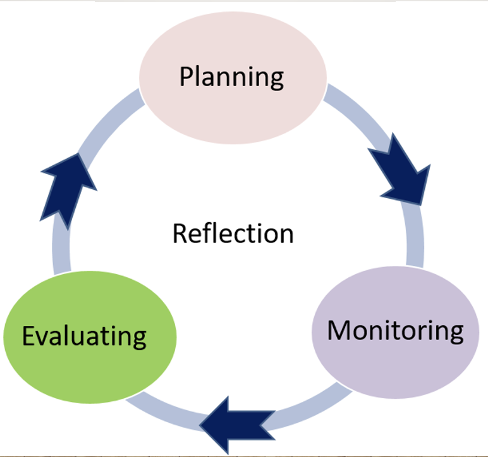
Metacognition is often explained through three key stages. Planning. Monitoring. Evaluating. These stages help pupils talk about their thinking in a structured and confident way.
Planning: How Will I Approach This?
Planning is the thinking that happens before the task begins. Pupils decide what the question is asking, which strategies they might use and what they will need to remember. This is where pupils make a plan rather than jumping straight in.
Talk prompts:
• What is this question really asking me to do
• What methods might work here
• What do I already know that will help me
Monitoring: How Is It Going As I Work?
Monitoring is the thinking that happens during the task. Pupils notice when something feels right and when something feels confusing. They check their progress and adjust their strategy if needed. Monitoring helps pupils stay active in the learning process rather than getting stuck in silence.
Talk prompts:
• Does this look right
• Should I change strategy
• What am I noticing as I go
Evaluating: How Did It Go And What Can I Learn From This?
Evaluating is the thinking that happens after the task is finished. Pupils review their choices, reflect on what worked and identify what they would improve next time. This step builds long term learning because pupils turn experience into understanding.
Talk prompts:
• What worked well for me
• What would I do differently next time
• What did I learn about myself as a learner
Where Did Metacognition Come From?
Assignment Overview:
1. Introduction to the Scheme of Work
I needed to explain why they chose the topic, how they designed or adapted the SOW and what pupil needs shaped their decisions.
2. The Scheme of Work Itself
The SOW needed to be fully designed and clearly justified. I decided on the structure, format, lesson flow and resources. Lesson plans could be included as appendices, but the focus was on the design decisions and rationale.
3. Evaluation of the SOW in Practice
After teaching the unit, I needed to evaluate how well the SOW met its aims. This included:
• What worked well
• What needed improvement
• How pupils responded
• How assessment and reflection shaped teaching
• What changes would improve future practice
Where the Metacognition Element Fits
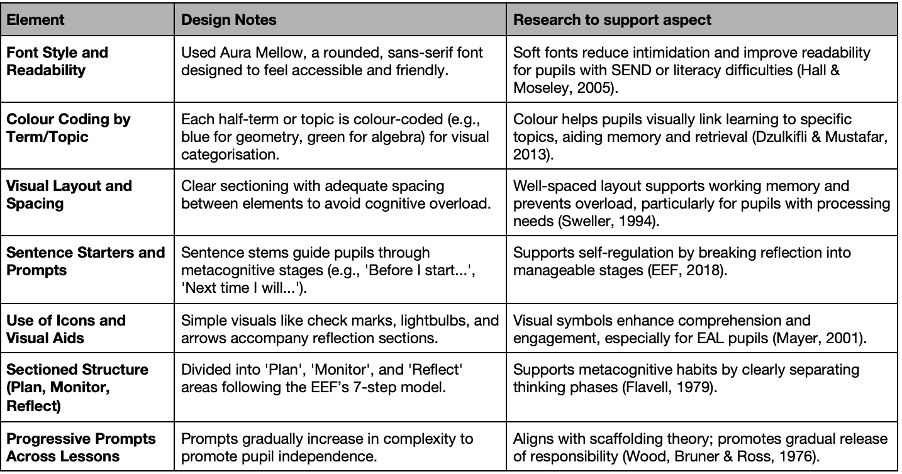
Metacognition was the distinctive feature of this unit. It was embedded using a bespoke metacognition booklet, a planning worksheet, and structured reflection routines inspired by the EEF’s seven-step model.
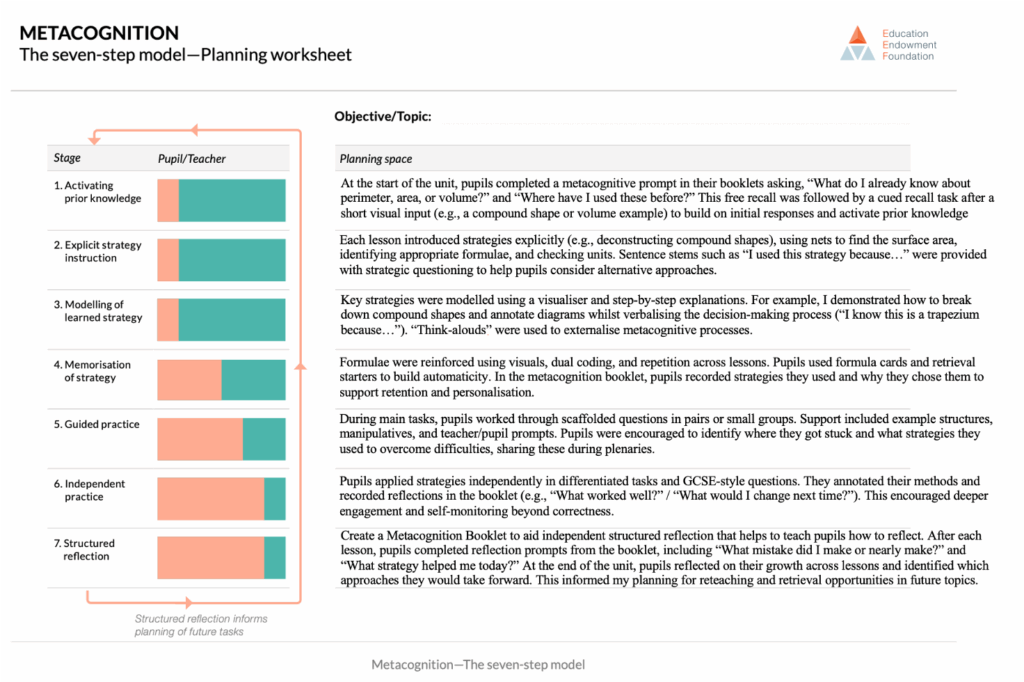
Pupils were taught to plan, monitor and evaluate their thinking before, during and after tasks. This helped them understand not only what method to use, but why it worked and how to adapt it.
The metacognitive tools included:
• Pre-task planning prompts
• Mid-task monitoring questions
• Post-task reflections using sentence stems
• Goal-setting linked to confidence ratings
• Strategy explanations guided by worked examples
• Mini reflections after assessments to identify next steps
The metacognition booklet (Appendix D) and planning worksheet (Appendix G) were essential in building these habits. They gave structure to thinking, helped pupils with SEND and literacy difficulties, and made their strategies visible to the teacher. When pupils consistently used these routines, their assessment outcomes and confidence ratings improved. The assignment shows that pupils who regularly engaged with metacognitive questions outperformed peers by an average of nine per cent, suggesting a meaningful link between strategy awareness and attainment.